Spoiler Notice: This article discusses the plots, characters, and reception of several anime and animated series and their live action adaptations. Some story details from both source material and adaptations are referenced throughout. Reader discretion is advised for those who have not yet watched these productions.
Introduction
For the better part of two decades, the phrase live action anime adaptation was reliably shorthand for disappointment — the specific creative failure of Hollywood and international studios attempting to translate the most visually inventive, the most emotionally complex, and the most culturally specific animated storytelling tradition in the world into the live action format and consistently producing results that satisfied neither the devoted fans of the source material nor the general audiences who encountered the adaptations without prior attachment to the original. The history of live action anime adaptation is littered with productions that understood the visual surface of their source material without grasping the emotional core, that cast performers who bore physical resemblance to animated characters without capturing the specific energy and the specific spirit that made those characters beloved, and that compressed the nuanced story arcs of multi-hundred-episode series into the breathless inadequacy of two-hour films whose structural limitations made genuine faithfulness impossible. And then something changed. The streaming era brought the budget, the creative ambition, and — crucially — the willingness to allow adaptation projects the episode count and the production timeline that genuine faithfulness to complex source material requires, creating the conditions for the specific creative success that the live action adaptation genre had been promising and failing to deliver for so long. This guide examines the most significant recent live action adaptations of anime and animated series — celebrating what has worked, examining what has not, and analysing the specific qualities that distinguish the adaptations that have earned the genuine affection of their source material’s fanbases from those that have added only to the genre’s cautionary tale catalogue.
One Piece (Netflix, 2023): The Adaptation That Changed Everything
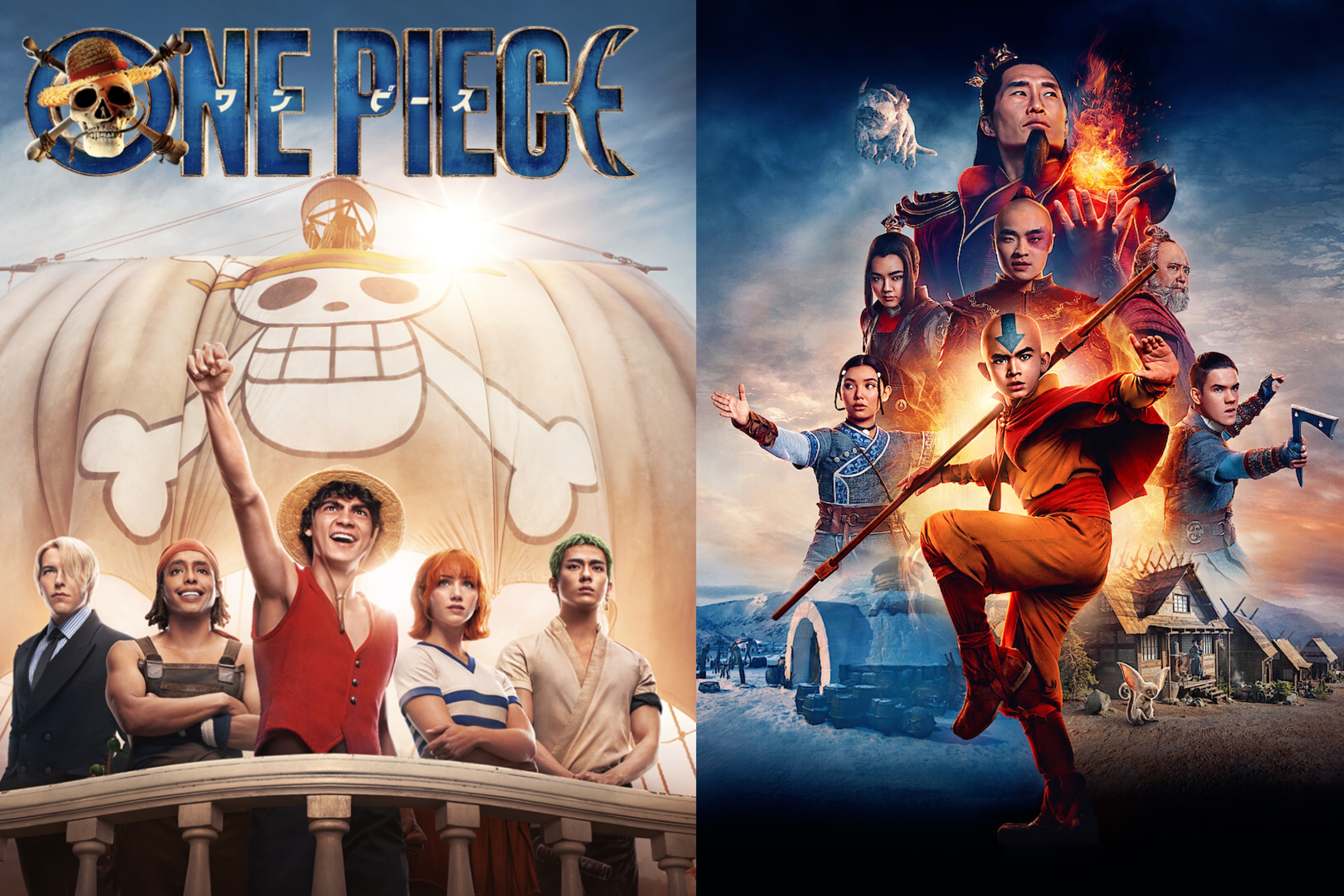
Netflix’s live action adaptation of Eiichiro Oda’s One Piece — the manga and anime series that has been running since 1997 and that has built one of the most passionate and most protective fanbases in the entire global entertainment landscape over the quarter century of its continuous publication — arrived in August 2023 carrying the specific weight of being the adaptation that every previous failed attempt at the genre had made seem genuinely impossible, and it proceeded to do something that no one had entirely believed was available: it was genuinely, enthusiastically, and almost universally good. The production, developed with the direct and continuous involvement of creator Eiichiro Oda whose specific approval was required at every stage of the creative process and whose willingness to depart from literal adaptation in service of the live action format’s specific requirements was balanced by his equally clear insistence on the emotional and tonal fidelity that the series’ spirit demanded, achieved a quality of creative collaboration between the original author and the adaptation team that set a new standard for how anime adaptations should be approached.
The casting of the eight-episode first season was the production’s most immediately and most decisively impactful creative achievement — the ensemble of Iñaki Godoy as Monkey D. Luffy, Mackenyu as Roronoa Zoro, Emily Rudd as Nami, Jacob Romero as Usopp, and Taz Skylar as Sanji collectively captured not merely the physical character of the Straw Hat crew but the specific interpersonal chemistry, the tonal balance between comedy and genuine emotional depth, and the individual characterisation of each crew member that the animated series had spent years developing to the point of profound audience investment. The production design — the Grand Line ships, the Marine headquarters, the various island environments of the East Blue saga — was created with the specific visual ambition of a production that understood it was attempting to bring one of animation’s most visually distinctive worlds into physical reality rather than creating a realistic world that merely resembled the source material at a comfortable distance. The result was a production that felt genuinely of its source material in the way that previous anime adaptations had consistently failed to achieve — faithful where faithfulness served the story, inventive where the format required it, and consistently committed to the specific emotional truth of what makes One Piece the beloved cultural phenomenon it has been for more than a quarter century.
The specific narrative choices that distinguished the One Piece adaptation from the failed adaptations of its predecessor genre were as instructive as the casting and production design successes. The decision to condense the East Blue saga across eight episodes — rather than the film-format approach of compressing it further or the slavish literalism of attempting to recreate it episode for episode — created the structural framework that allowed genuine story development without the breathless compression that makes film-format anime adaptations feel like inadequate summaries of their source material. The willingness to reimagine specific story sequences for the live action format while maintaining their emotional function demonstrated the creative sophistication that understands adaptation as interpretation rather than transcription. And the tone — the specific combination of joyful adventure, genuine emotional stakes, character comedy, and the series’ fundamental optimism about human connection and the possibility of finding your people in the world — was maintained with a consistency that told every viewer who knew and loved the source material that the people making this production genuinely loved it too.
Avatar: The Last Airbender (Netflix, 2024): The Second Attempt and the Lessons Learned
Avatar: The Last Airbender holds a unique position in the live action adaptation conversation as the rare source material whose previous live action attempt — M. Night Shyamalan’s 2010 theatrical film — was so comprehensively and so memorably unsuccessful that it has become one of the most cited cautionary tales in the entire history of adaptation, simultaneously demonstrating everything that can go wrong and setting the quality bar for any future attempt so low that the specific question of whether a new attempt could be worse was genuinely more reassuring than it perhaps should have been. Netflix’s 2024 series — developed initially with the direct involvement of original series creators Michael DiMartino and Bryan Konietzko before their departure from the project, and subsequently completed under the showrunnership of Albert Kim — arrived carrying both the franchise’s extraordinary legacy of critical acclaim and audience devotion and the specific complications of its development history.
The Netflix Avatar adaptation’s reception demonstrated the specific complexity of adapting a source material that is already itself in live action proximity — the original animated series, for all its anime-influenced aesthetics and its East Asian cultural foundations, tells a story whose emotional sophistication, narrative density, and character development across its three-season arc were already achievements of a quality that placed it among the finest American animated television ever produced. The specific challenge of adapting a series whose greatness is in its narrative precision, its character arc construction, and the specific earned emotional payoffs of its three-season structure into a format that requires condensation and reinterpretation is different from adapting a manga whose adaptation challenges are primarily visual and tonal rather than structural, and the results reflected this difference in complexity. The first season demonstrated genuine visual ambition in its realisation of the Avatar world’s elemental bending, created significant individual moments of genuine quality, and assembled a cast whose individual performances were often compelling — while also making the specific structural and tonal choices in condensing and reimagining the source material that divided its audience between those who found the new interpretation a worthy new vision and those who found the departures from the source material’s specific magic more costly than the production acknowledged.
The Avatar adaptation’s most significant achievement was its demonstration that the bending arts — the specific visual vocabulary of the animated series whose elemental martial arts were among its most beloved and most distinctive features — could be realised in live action with genuine spectacle and genuine physicality. The specific decisions about what to preserve and what to reimagine from the source material illuminated the general principle that the most successful live action adaptations are those whose choices are guided by genuine understanding of what makes the source material specifically great rather than by the desire to make it more conventionally cinematic or more immediately accessible to audiences unfamiliar with the original.
Cowboy Bebop (Netflix, 2021): The Cautionary Tale That Still Matters
Netflix’s live action adaptation of Cowboy Bebop — the 1998 anime series whose combination of jazz soundtrack, space-western aesthetics, existentialist themes, and character depth created what many consider the finest single anime series ever produced — arrived in November 2021 carrying enormous anticipation and departed after a single season as one of the most instructive failures in the recent history of live action adaptation, demonstrating with uncomfortable clarity the specific ways in which a production can get every individual element approximately right while still fundamentally missing what makes a beloved source material beloved. The adaptation’s failure was not primarily one of budget — the production values were high — nor one of casting — John Cho as Spike Spiegel, Mustafa Shakir as Jet Black, and Daniella Pineda as Faye Valentine were individually watchable in roles that demanded significant physical commitment — but of tonal and thematic understanding whose absence revealed itself most painfully in the specific ways the adaptation modified the source material’s narrative and emotional character.
The original Cowboy Bebop’s genius was its specific balance — the cool, laconic surface concealing the profound, barely spoken emotional pain beneath it, the jazz-inflected narrative structure that allowed episodes to breathe and to be felt rather than simply watched, and the specific restraint of a series that trusted its audience to read between the lines rather than explicating its themes directly. The live action adaptation’s instinct to externalise what the original kept internal, to verbalise what the original communicated through atmosphere and implication, and to amplify the melodrama that the original approached with the specific coolness whose maintenance was the key to its emotional impact revealed the fundamental misunderstanding of what the source material was specifically achieving. The result was a production that looked something like Cowboy Bebop without feeling like it — the specific quality of the animated series’ ineffable cool replaced by the specific awkwardness of a production that was trying very hard to be cool and therefore could not quite achieve it.
Demon Slayer and Dragon Ball: The Adaptations the East Creates for Itself
The live action adaptation landscape for anime is not exclusively a Western streaming industry phenomenon — the Japanese film and television industries have their own long tradition of adapting domestic manga and anime properties into live action formats whose specific cultural proximity to the source material creates both advantages and distinct challenges that differ meaningfully from those faced by Western adaptations. The Japanese live action adaptations of Demon Slayer, Dragon Ball, and the various other major manga properties that have been produced for domestic theatrical and television release demonstrate the specific qualities — and the specific limitations — of adaptation produced from within the same cultural context as the source material rather than from outside it looking in.
The 2020 Japanese theatrical film of Demon Slayer — released as a standalone continuation of the first anime season rather than as a reboot or a beginning-over adaptation — achieved the specific commercial and critical success of a production that served an existing fanbase with extraordinary fidelity to the tone, the visual ambition, and the emotional intensity of the source material, breaking multiple domestic box office records in Japan and demonstrating that the anime adaptation as theatrical event could achieve the mainstream commercial reach that previous adaptations had rarely sustained. The Dragon Ball live action history — whose most notorious Western entry, the 2009 Dragonball Evolution, produced one of the most comprehensively criticised adaptations in the entire genre’s history, and whose subsequent Japanese production attempts have navigated the specific challenges of realising a fundamentally cartoon-logic action series in physical reality with varying degrees of success — illustrates the persistent challenge that the most visually extreme anime properties present to any adaptation attempt whose relationship to physical reality inevitably creates the gap between the source material’s visual ambition and what live action production can credibly achieve.
Why Some Adaptations Succeed and Others Fail: The Principles That Matter
The comparative analysis of successful and unsuccessful live action anime adaptations reveals the specific principles whose presence or absence most reliably determines the outcome — principles that transcend the specific properties being adapted and that illuminate the fundamental requirements of the adaptation form whose consistent application creates the conditions for genuine creative success rather than the creative compromise that the genre’s most disappointing examples have consistently demonstrated.
Author involvement and creative respect is the principle whose presence in the One Piece adaptation most distinguishes it from the productions that have failed — the specific creative framework of Eiichiro Oda’s direct participation in the development process, his genuine support for the creative team’s interpretive decisions within the framework of the source material’s essential character, and the mutual understanding between creator and adaptors that the goal was to honour the spirit rather than to replicate the letter of the original created the collaborative dynamic that every successful adaptation requires and that the dismissal or marginalisation of the original creator most reliably prevents. The understanding that the source material’s audience is an asset rather than a constraint — that the passionate existing fanbase whose knowledge of and affection for the material is deep represents the most knowledgeable possible quality control resource available to any adaptation project — is the attitudinal foundation whose presence distinguishes the adaptation team that genuinely loves and respects what it is adapting from the one that views the source material as raw intellectual property whose adaptation requires the removal of its most distinctive and most challenging elements rather than their creative realisation in the new format.
The structural decisions that determine how much source material any adaptation attempts to cover and across what episode or running time count are among the most directly consequential creative choices whose impact on the adaptation’s quality exceeds that of almost any individual casting or production design decision. The films that attempt to compress multi-hundred-episode anime series into two hours are beginning from a structural position whose inadequacy makes creative success extremely difficult regardless of the quality of every other decision made within that constraint. The series format that allows genuine narrative development, genuine character arc construction, and the specific emotional pacing that the source material’s structure was designed to provide creates the conditions for genuine faithfulness whose availability in the streaming era has been the most directly enabling factor in the current improvement of live action adaptation quality that the success of One Piece most clearly demonstrates. In the landscape of movies and entertainment, the live action anime adaptation has entered a new era whose defining characteristic is the growing understanding that the specific qualities that make anime and animation beloved by their audiences are precisely the qualities that live action adaptation must preserve and honour rather than moderate or eliminate in the name of mainstream accessibility — and whose most exciting productions are those that embrace this understanding with the specific creative ambition and the specific faithful love of the source material that the best adaptations of any form have always demonstrated as the prerequisite for the specific quality of creative achievement that genuine fans of any original work most deeply recognise, most warmly celebrate, and most sincerely deserve.
The Future of Live Action Adaptation: What’s Coming and What It Could Mean
The pipeline of announced and in-development live action adaptations of beloved anime and animated properties has never been fuller or more ambitious — a reflection of both the commercial lessons learned from the successes of recent years and the growing confidence of studios and streaming platforms that the format, when executed with genuine quality and genuine respect for the source material, can attract the audience crossover between existing fans and new viewers that makes adaptation a commercially attractive investment whose cultural return extends beyond the immediate viewership into the sustained conversation about the properties’ legacy that successful adaptations consistently generate. The announced adaptations whose development the anime and animation fandom is most eagerly and most anxiously watching include projects of sufficient ambition and sufficient source material quality that their success or failure will be felt across the entire adaptation landscape.
The Netflix adaptation of Sword Art Online — one of the most commercially successful and most globally recognised isekai anime properties of the streaming era — faces the specific challenge of adapting a series whose most compelling elements are the internal psychological experience of virtual reality immersion and the specific stakes of a scenario whose physical reality the live action format must somehow convey without the visual shorthand that animation provides for depicting the experience of inhabiting a digital world with genuine physical consequence. The announced live action adaptation of Naruto — the third pillar of the generation-defining Big Three alongside One Piece and Bleach — carries the specific weight of being the most beloved and the most globally recognised anime property whose live action adaptation has not yet been attempted at the streaming series level, and whose success in the hands of the right creative team could be as culturally significant as the One Piece adaptation while whose failure would be felt as a specific cultural disappointment by the hundreds of millions of viewers for whom Naruto was the anime that defined their relationship with the medium. The decisions that the studios and streaming platforms behind these projects are making right now — about creative teams, about author involvement, about episode count and structural approach, and about the fundamental question of what they believe the source material is specifically great at and how they intend to honour that greatness in a new format — are the decisions whose quality will determine whether the current golden age of live action anime adaptation continues its upward trajectory or produces the high-profile failure that reminds everyone how difficult the form genuinely is when approached without the specific combination of ambition, respect, and creative intelligence that the best recent examples have demonstrated is both available and necessary.
Conclusion
The live action adaptation of anime and animated series has entered a genuinely new era — one whose defining characteristic is the growing evidence that the specific challenge of translating the animated medium’s visual language, its emotional register, and its narrative ambition into live action production is not insurmountable but is instead achievable when the creative conditions are right. One Piece proved that the most beloved and the most seemingly unadaptable properties can be brought to life with genuine fidelity when the author is genuinely involved, when the creative team genuinely loves the source material, when the structural decisions respect the story’s requirements, and when every department commits to the specific ambition of creating not a live action version of an animated series but a live action realisation of an animated story whose truth is larger than any single medium’s specific constraints. Avatar: The Last Airbender demonstrated both the genuine difficulty of the form and the genuine possibility of approaching it with the visual ambition and the cultural respect that the source material’s extraordinary legacy deserves. And Cowboy Bebop, for all its frustrations, provided the most instructive lesson of all — that getting the surface right without getting the soul right produces the specific failure that is more disappointing than any production that never tried at all. The audience for live action anime adaptation is the most knowledgeable, the most passionate, and the most specifically demanding audience available in any genre of entertainment — and the productions that earn their genuine affection by earning their genuine respect are the ones that will define the creative standard of a form whose best years, on the current evidence, are very much still ahead.